Thursday, May 30, 2013

It's Spring...wait I mean Summer in Finland!

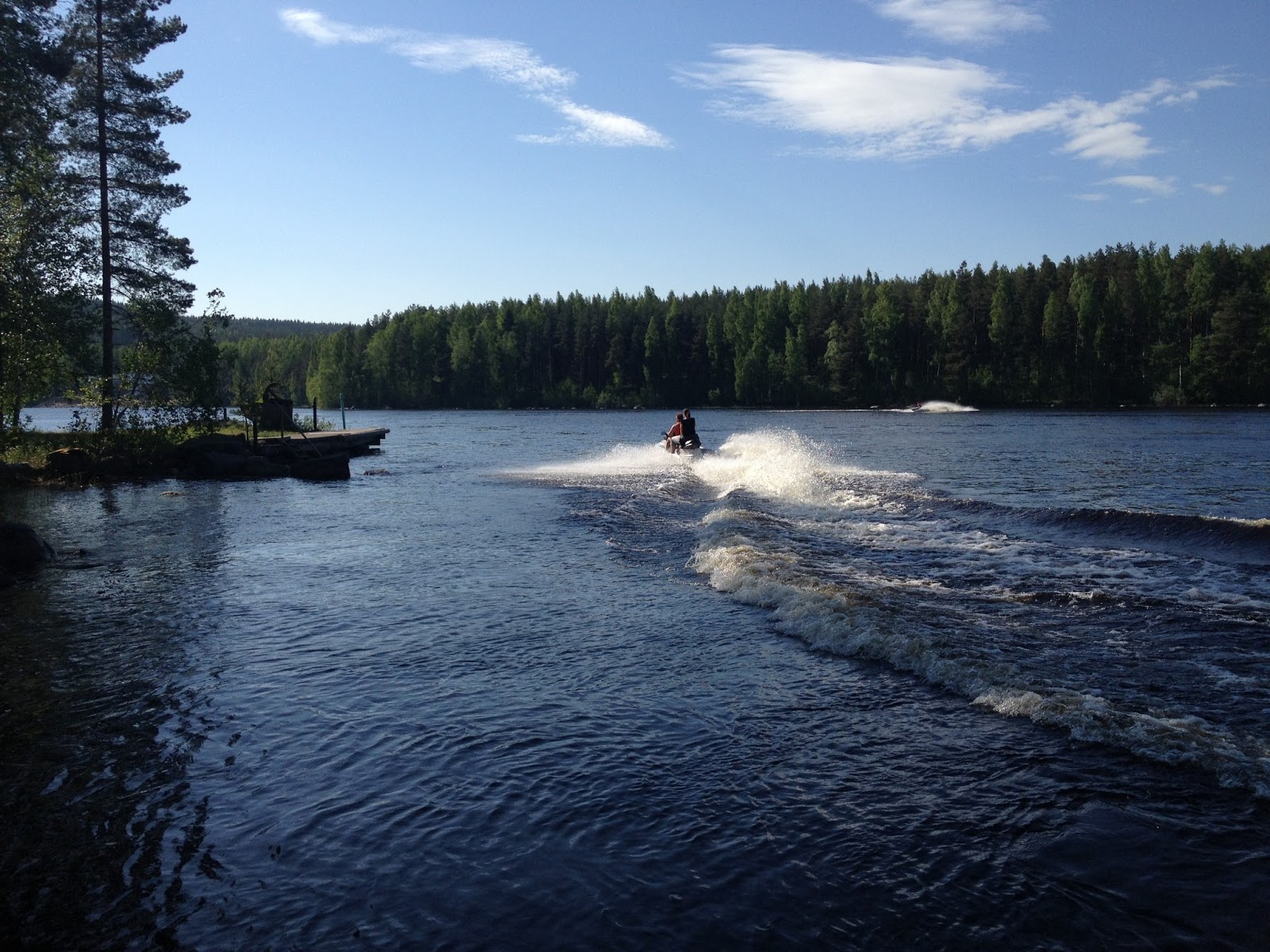
We have had some of the most amazing spring days that are feeling quite like warm summer days!  Days that are full of reading in the park, picnicking with friends, slowing down to enjoy the freshly mowed lawn and the brillant blue skys- the perfect 75 degree day seems to be on repeat here and you won't find me complaining!

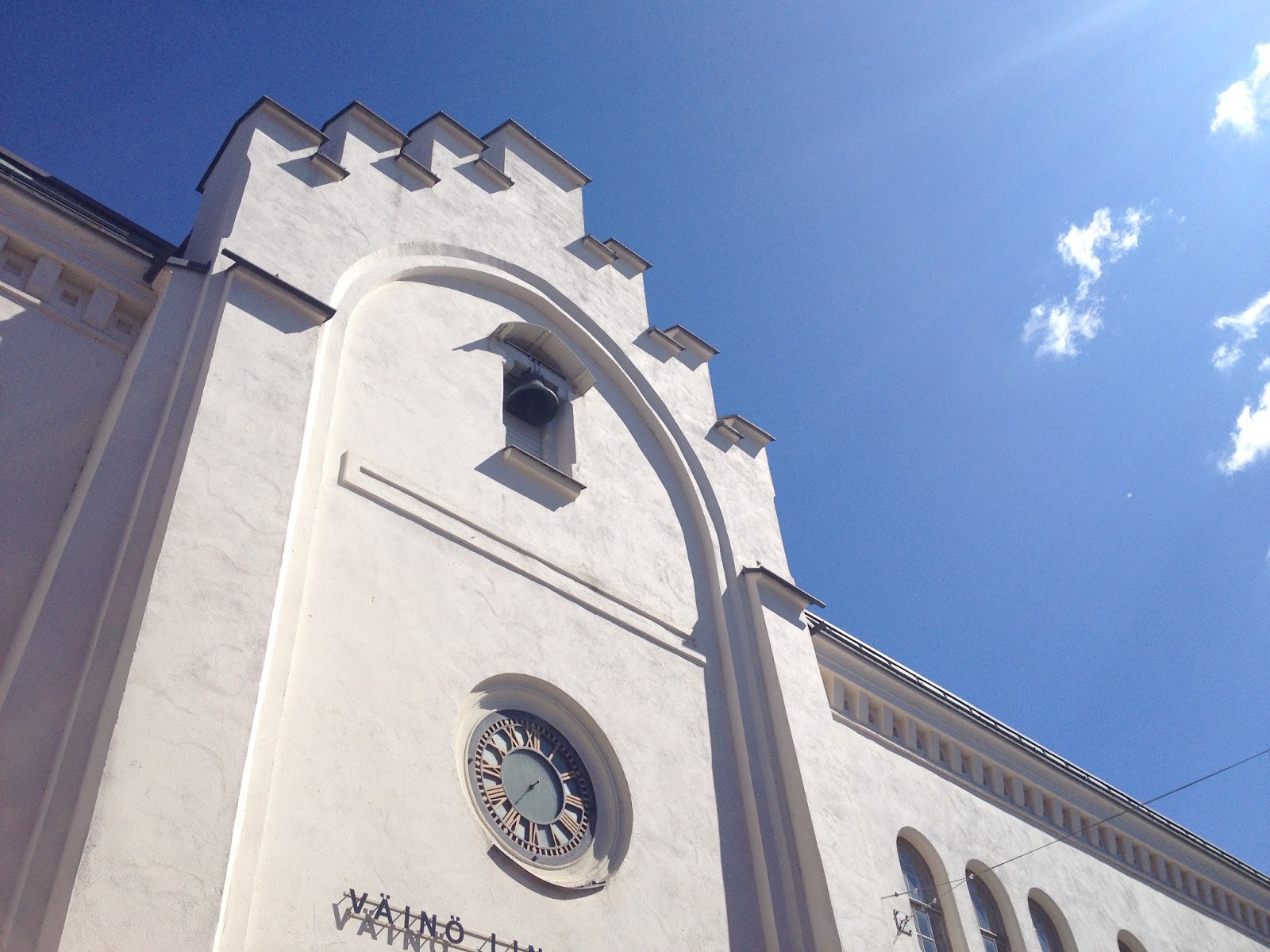
Helsinki
Jyväskylä
Tampere
Tuusniemi

Tuusniemi

Tampere

Tampere
Tampere


Jyväskylä

Jyväskylä


Pudas' summer cottage

Jyväskylä

Pudas' summer cottage- making coffee from lake water
yummy Finnish pancake with cloudberry jam :)

Long daylight hours means more time to play!


Tuesday, May 28, 2013

Something I Think About Almost Everyday

I was trying to explain the American vocational system (or the growing lack there of) to a Finnish confectioner student today. I said that American's typically defines vocational school areas of study as mechanics, construction, cosmetology, electricians and sometimes but very rarely, culinary arts.  She was just as shocked at the limited options for students as I was at the amount of options for Finnish students. I realized that I haven’t actually shared the amazing things that are happening in this country in a way that lets you know how truly amazing the vocational program is. This young lady is graduating on Friday and as been nominated by her peers to give the speech at graduation. When I asked her what she is going to say, her response was to talk about how lucky she has been to find something she loves to do that makes people happy. Again I walked away from a conversation amazed at the opportunities that Finnish students have for school and the role they play in their own education.

First let me back up. When I say vocational school qualification, I actually mean that students can get qualified in any of the following areas (each of these are linked to The Finnish National Board website and the curriculum for each qualification):

Culture

Humanities and Education

Natural Resources and the Environment

Natural Sciences

Social Sciences, Business and Administration

Social Services, Health and Sport

Technology, Communication and Transport

Vocational Qualification in Aircraft Maintenance 2010 (pdf)
Vocational Qualification in Building Maintenance Technology 2010 (pdf)
Vocational Qualification in Construction 2009 (pdf)
Vocational Qualification in Electrical Engineering and Automation Technology 2009 (pdf)
Vocational Qualification in Food Production 2009 (pdf)
Vocational Qualification in Information and Telecommunications Technology 2009 (pdf)
Vocational Qualification in Laboratory Technology, Laboratory Technologist 2009 (pdf)
Vocational Qualification in Land Surveying 2010 (pdf)
Vocational Qualification in Logistics 2009 (pdf)
Vocational Qualification in Metalwork and Machinery 2010 (pdf)
Vocational Qualification in Property Maintenance Services 2010 (pdf)
Vocational Qualification in Publishing and Printing 2010 (pdf)
Vocational Qualification in Seafaring 2010 (pdf)
Vocational Qualification in Textiles and Clothing 2009 (pdf)
Vocational Qualification in Upholstery and Interior Design 2009 (pdf)
Vocational Qualification in Vehicle Technology 2009 (pdf)

Tourism, Catering and Domestic Services


Amazing right?!  Keep in mind that each of these have specialty study programs within the general qualification.  The broad definition of vocational studies allows about 50% of students in upper secondary schools to take classes that are hands-on and in the interested career field of their choice. It takes 3 years and these vocational studies are combined with general studies to give a qualification certificate. The coolest part of this process is how much time students spend in “on the job learning.” This means that students see the relevance of what they are doing in the context of careers. This also means that you learn what you don’t want to do in the context of careers. Yesterday I talked to a student is who is studying practical nursing. She very confidently said she learned that she has no desire to work with kids because she worked in a daycare and didn't like it.  She then worked in an elderly care home and realized she loved old people. Fantastic! I love hearing about experiences that help students figure out what they want to do before they get stuck doing it for years.

I recently got a chance to go to Skills Finland which was held in Joensuu this year. This event is a showcase of the best students from all of the vocational schools around Finland in their fields.  IT WAS AMAZING!!  The excitement that these guys and girls had about demonstrating their skills was contagious!  Here are some shots from the 3-day event.


 It was truly an amazing showcase of talented young people in so many different vocations!

Marita and Roosa-Kateriina presenting in Round 1

I am maybe most excited for these ladies.  

I got a chance to practice with them as “an English speaking tourist” while they prepared to compete in the tourism field.  I figured it was a role I have mastered over the years!  These two young ladies were so motivated to work hard and to do well in their field and that hard work paid off as they came in 2nd place!  I am so excited for them and what is ahead for each of them now that they have graduated.


So I find that I ask myself almost everyday here, why can’t we do this for American students?  Now I know that there are many factors that can answer that question- skilled labor isn’t as valued, it is hard to make a living wage in the States on some of the career paths, racial stereotypes and maybe the biggest pushback is that this isn’t college. The more we push the rhetoric of college for everyone, the farther away we move from something like Skills Finland ever happening in the US. 

There are also a lot of factors that play into why this program is important in Finland- you need a certificate of qualification to get almost any type of job, you can make a living wage in many different industries, there is a cultural value of equality, and maybe most importantly, you need everyone working and paying taxes to support the social welfare system the country values.  Skilled labor is valued here and everyone is seen as playing an important role in society- no matter what your job is.

But I still ask, why can’t we create an education system in American that values individual interest over standardization?  I have taught many students over the past 8 years that would benefit from having an education that involves hands-on, relevant career focused learning. 


This New York Times article, “Texas Considers Backtracking on Testing" makes me hopeful that people in the US are talking about these very questions. The problem is complicated and there is no one simple answer. But it is my hope that maybe we can take the parts of Finnish vocational schools that work, combine it with what works in the US and create a place where people acknowledge that critical thinking, teamwork, collaboration and innovation are present vocational classrooms too.

Monday, May 20, 2013

It's Vappu Time!

Or at least it was! I am a little late posting about the celebration as it happens on May 1st! Yikes! But I keep thinking about a few things that happens around this holiday so I guess better late than never!

Vappu is the Finnish holiday that celebrates the coming of summer and workers rights. Here is a more detailed description of the holiday. What I didn't realize is that Vappu is actually like two holidays in one! You celebrate Walpurgis Night the day before by partying in the park and capping a public statue.  Here is where I think things get interesting.

In Finland, when you successfully take your matriculation exams you get a white cap that looks like this:


This cap is a REALLY BIG DEAL! And anyone who gets one, wears it proudly on Vappu for the rest of their lives! Not kidding, the rest of your life.

Here are some pictures from the capping of the statue in Jyväskylä on April 30th.


The overalls represent the university program you
are currently studying.  The patches are a fun twist.


These are the winners of Amazing Race Jyväskylä who get
to put the cap on the statue.  Big deal! 

After the cap goes on the statue, everyone puts their own cap
on and start singing and celebrating!


Then on May 1st, everyone gathers outside with family and friends (still wearing the overalls and the white cap) to celebrate by picnicking and enjoying the new season. I had a fantastic time even though at one point someone said, "are we really picnicking in the hail?" None of us moved- we are all becoming a little more Finnish! Here are some shots from the day.

Band walking by playing cheery tunes!

Lots to eat and drink- including Sima!  Delicious!


Old car parade through the streets of Jyväskylä
After hanging out in the park and watching all the white caps on the heads around me, I started thinking about this holiday and how it has an interesting twist. Finland is very proud of the fact that it's educational philosophy and therefore reforms are focused on equality. Every school is the same. Every child has an equal opportunity to get a quality education. There are no divisions- every path is seen as successful.  However, this holiday divides a country along educational lines. Students who don't take the matriculation exam (read here-vocational students) don't get a cap. They can celebrate, but they don't get to wear the highly regarded white cap. A division right down the middle. 

Now it is only a division if the people who don't have a white cap, want one. I asked around and got a lot of different answers. It appears that a few years ago, vocational school graduates started getting their own cap, but I didn't see anyone wearing a different kind of cap. Since most of my Finnish friends are either teachers or in university, the majority of them have a white cap to break out for Vappu making my survey skewed. What I do know is that after talking with a class of double diploma students (getting both vocational qualification and taking the matriculation exam) the first thing out of their mouth when talking about motivation is that white cap. That tells me that no one likes to be left out of a celebration.

It was a great day to celebrate spring with friends even without a white cap!  


I walk past these senior pictures every time I walk to town
could be why I am still thinking about Vappu!

Tuesday, May 7, 2013

I Went North, Way North!


A few weeks ago, I went north for some school visits and to see the famous Finnish Lapland. When I say I went north, I actually mean about 4 hours north of the Arctic Circle! For a girl who normally flies south for April Spring Break in search of a nice warm island to stake claim to a little slice of beach for the week, going north was a new concept. There are many things about this trip that keep coming back to me and make me realize that the importance of this trip was and will be far greater than I imagined. 

We spent some time in schools in two different towns- Inari and Ivalo. Both towns are small with Ivalo having a population of about 4,000 and Inari with about 6,000 people. Both towns are dependent on tourism and hosting people like me who want to hang out with reindeer, spend some time enjoying a husky ride and frequently check the sky for northern lights. Both towns are also working really hard at trying not only to preserve the Sámi culture, but also to decide what that means in the context of today’s world.

The Sámi people are the only indigenous people of the European Union. Since 1996, the Sámi have had the constitutional right to self-govern in the Sámi Homeland (much of Lapland) regarding language and culture. There are about 10,000 Sámi people living in Finland however over 60% of them live outside the Sámi Homeland. Traditional livelihoods include reindeer herding, fishing, hunting, agriculture and handicrafts (keep in mind they do all of this in some pretty harsh winter conditions!). Today it is very common to find Sámi combining traditional livelihoods with tourism and services. If you want to know more about the history of the Sámi people, read here and here. Laurie's research has been focused on how the Sámi are taught in schools and has found that in most cases they are a forgotten group of people. I have found in talking with students in both Jyväskylä and Helsinki, they know very little about the people who first inhabited their country. I decided to spend time in the Sámi Homeland so that I could get a better understanding of this group of people.    

Our first school visit was with an incredibly kind and patient woman, Petra Kuuva. She teaches 7 students in pre-school, grades 1 and 2, in the Inari Sámi language. She showed us this picture as an example of a project she did with her students:  


Traditional Inari Sámi Dress
Each piece of rice represents a speaker of the different Sámi languages. The blue paper has about 300 grains of rice and represents the Inari Sámi speakers. The green paper represents the Northern Sámi speakers who total about 1000 in Finland (this language can also be found in Norway and Sweden) and the blue paper represent the 300 speakers of the Skolt Sámi language in Finland (also spoken in Russia). In one glance, I understood the uphill battle of keeping the Inari Sámi language alive and spoken in conversation not just at ceremonies or formal events. Each of the students in her class are Sámi, but not all of them have Inari Sámi spoken at home adding to the importance of this immersion to keeping the language alive.


Petra talked openly about having limited resources in the Inari Sámi language and having to create much of the material herself for the lessons. After spending the day with her, I have no doubt these children are in good hands and are proud of being Sámi.


We got to spend an afternoon watching an artisan talk about her craft and how she “takes strength from the past” to pursue the things of her future. While I listened, Satu Natunun turned wool into felt and told the story of her people. She is a well traveled woman and is open to new ideas and people but finds that the “Sámi provides stability to her life.” She smiled when she said, “Sámi provides the flavor to her art.” I couldn’t help but smile too. Christine made this wonderful video that helps tell her story.

(for some reason, you tube won't link to it with the video image- take time to watch! It's a good one :)


After I left Satu’s studio I kept coming back to the conversation we had about who is Sámi. Over the course of the next couple of days, we found ourselves in the middle of several conversations trying to answer this question. Spending the day at the Vocational School for traditional Sámi handicrafts and the next morning hanging out with a reindeer herder, it is clear that Sámi have had to adjust the way they teach their traditions and skills over time. Some elders don’t think that reindeer herding should be taught in schools, but should be taught through family and traditions. The Institute responded, by changing the structure of the school so students can learn in the many small villages around the area instead of forcing them to move to Inari to go to school. Teachers work closely with reindeer owners to ensure that students meet the requirements of the school and then have students demonstrate what they have learned to earn their certificate. Handicraft students struggle with whether to use traditional materials or easier more accessible modern materials. Maybe the most important part of this conversation is now to remain true to Sámi ways, when tourists are looking for a commercialized (and often cheaper) version. 

The high school students that we visited gave some insight into this dilemma. When asked if Sámi people should carry identification cards (like the American Indians do), the answer was no. If you speak the Sámi language and you have Sámi relatives, you are Sámi. Sounds simple. But then what if you aren’t Sámi and want to learn the language? 


The son of a very famous Sámi artist (and a true artist himself) strongly believes you shouldn’t be allowed to, that it isn’t your culture. The tension between inclusion and exclusion is clearly present in this generation of Sámi. The question of sticking with the old ways or finding new ways to hold to traditions is something that continues to be wrestled with for all who are thinking about these issues. I have no doubt that this generation will take the advice of Satu and find comfort in the “strength of the past” as they begin to push their people into the future.


Another bonus of this trip is that I got to know Laurie better. At each school she gave a presentation about the Cherokee people, her people. With the added story of the Cherokee, I was able to make connections and think about the parallels and differences between the stories of the American Indian and the Sámi. These conversations will push me to give more time to the voice of indigenous people in my classroom. Plus, it was great to see the student’s reactions to Laurie and all the questions they had after her presentations.

Christine and Laurie, dressed in
traditional Cherokee clothing

I learned a new word while I was in Inari- baiki.  In Northern Sámi language it means, “the place where your heart is.” It is the name of the newspaper for the Sámi people in the States (you can read about it here). I really like the way this word resonates with me. My heart was moved by the people and students that we got to meet on this trip. Because of that, part of my heart will always be with the Sámi and I will always be grateful for the way they opened themselves and their culture to teach me. My heart will also be with Finnish Lapland. Although I wasn’t there in the middle of winter with the fells covered in snow, the beauty of this part of Finland is impossible to ignore.