Monday, June 10, 2013

The Flip Side of Autonomy

Teachers in Finland have lots of autonomy. It’s a cultural thing. Since teaching is seen as a highly regarded profession it comes with the territory. Admission into the primary education training program is very competitive and although a little easier for subject teachers is still seen as difficult to become an upper secondary teacher. Teachers must complete a bachelors and masters degree before they can hold a fulltime position in a school. Teachers get to decide what the curriculum looks like at the local school level and they ultimately are in control of what gets taught each day. Teachers are trusted to do their job and so are not bound to being on campus unless they are teaching a class or attending a meeting. There are no evaluations, observations, lesson plan posting or required board configuration that often fill a US teacher’s day. There is a well organized, easy to use web based communication system that all stakeholders (teacher, parents, students) are expected to check regularly for information on grades, attendance and specific student concerns or successes. Teachers are professionals here and they are trusted to do their job.

But there is a flip side to all of this autonomy. I recently met with the head of teacher training at the University of Jyväskylä as a way to understand the teacher training process better. I have recently been reading a lot more about the educational reform and Finnish history that has happened in the last 60 years. I have been struck with how all of the information talks about how the pedagogy of the teacher training program has changed from being teacher-centered to student-centered. However, when I spend time in high school classrooms I am still seeing a lot of lessons that are primarily teacher directed and textbook driven. What happens to teachers after they leave University that changes the way they teach?

Dr. Tiina Silander answered very simply- the culture of the old way is too strong and first year teachers are too overwhelmed to fight against it. Sound familiar? When a new teacher is stressed out, they revert back to the way they have been taught and they way the older teachers in the building are teaching. Since they are autonomous, there is no way to mandate supports or structures that would help. It seems  that often the work is undone from the past 5 years of practical theory that they learn. Obviously this doesn’t happen to every teacher, but just like in the US it happens to many. 

Every year Finnish teachers have to attend 3 professional development days. There is a law that says that the topics of those days cannot be mandated and that teachers can choose the professional development they want to attend. Although this sounds wonderful, the flip side is that there can’t be a requirement to have teachers study student-centered methods. Because administrators don’t regularly evaluate or observe teachers, there are often areas of growth that go unnoticed.  There are several strategies that have been put in place to help support teachers and their professional growth such as mentors, peer group mentoring and a seemingly strong culture of collaboration.  But none of these initiatives can be mandated making them only useful if you are in the right space to take advantage of them.    

Students also have a lot of autonomy. I recently attended a learning cafe where there were multiple stakeholders gathered to help brainstorm some solutions to problems that are routinely coming up in vocational schools. One of the common problems was that there can be little to no communications between multiple organizations who are helping students- social workers, health services, and the school. There are a lot of laws that support student privacy and so there are ways that students are using this autonomy to "work" the system. One of the solutions that was presented was to create a flowchart outlining what each stakeholder's responsibility is so that student's cannot be double-dipping into resources but the student's could maintain their autonomy.


Even though there are days in my US classroom where everything feels mandated, I have to remember that the flip side has its disadvantages too. As with many things, it is only in the middle that we find a true balance and it is in the conversations that we learn the value of that balance.

Thursday, May 30, 2013

It's Spring...wait I mean Summer in Finland!

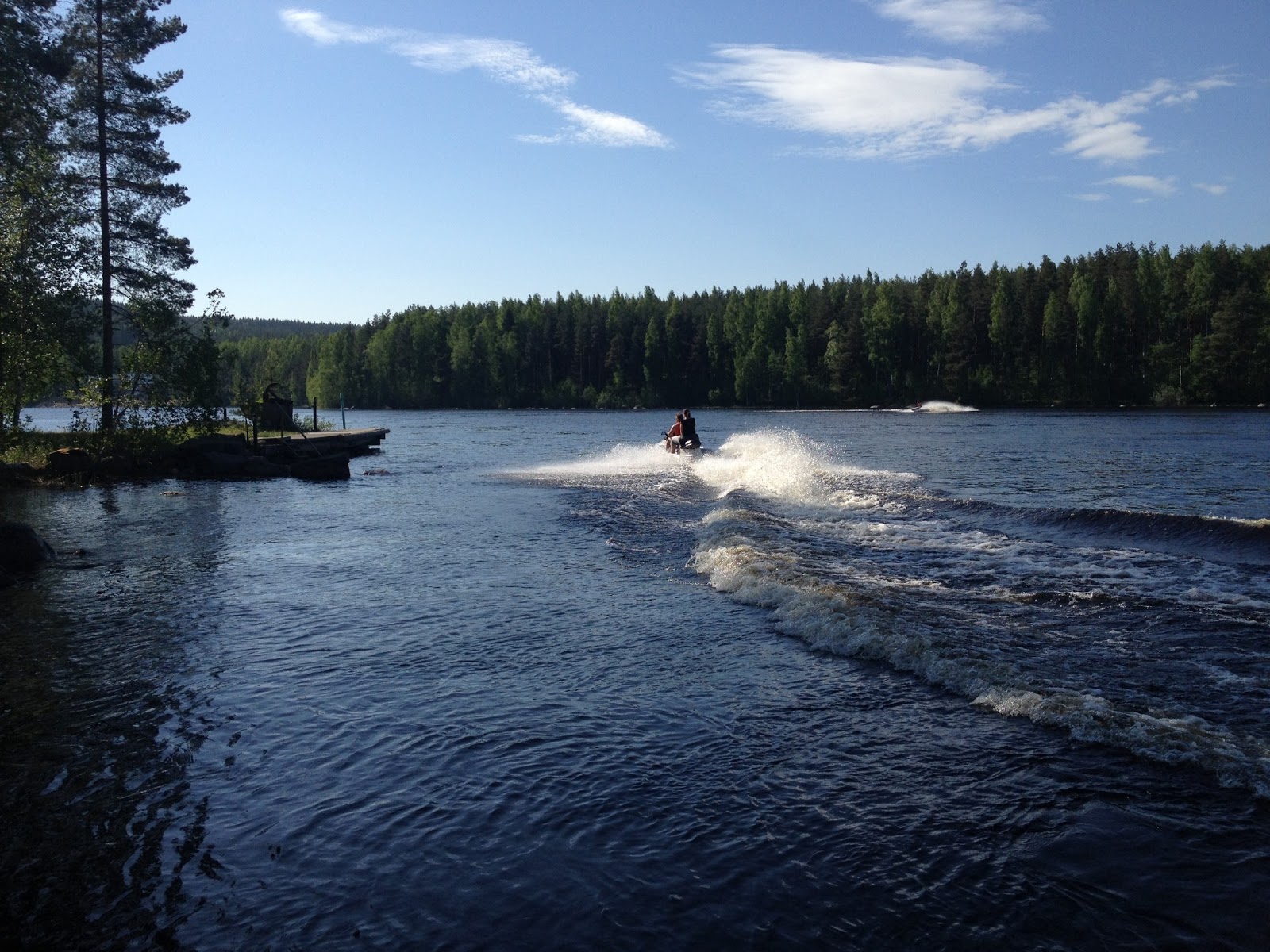
We have had some of the most amazing spring days that are feeling quite like warm summer days!  Days that are full of reading in the park, picnicking with friends, slowing down to enjoy the freshly mowed lawn and the brillant blue skys- the perfect 75 degree day seems to be on repeat here and you won't find me complaining!

Helsinki
Jyväskylä
Tampere
Tuusniemi

Tuusniemi

Tampere

Tampere
Tampere


Jyväskylä

Jyväskylä


Pudas' summer cottage

Jyväskylä

Pudas' summer cottage- making coffee from lake water
yummy Finnish pancake with cloudberry jam :)

Long daylight hours means more time to play!


Tuesday, May 28, 2013

Something I Think About Almost Everyday

I was trying to explain the American vocational system (or the growing lack there of) to a Finnish confectioner student today. I said that American's typically defines vocational school areas of study as mechanics, construction, cosmetology, electricians and sometimes but very rarely, culinary arts.  She was just as shocked at the limited options for students as I was at the amount of options for Finnish students. I realized that I haven’t actually shared the amazing things that are happening in this country in a way that lets you know how truly amazing the vocational program is. This young lady is graduating on Friday and as been nominated by her peers to give the speech at graduation. When I asked her what she is going to say, her response was to talk about how lucky she has been to find something she loves to do that makes people happy. Again I walked away from a conversation amazed at the opportunities that Finnish students have for school and the role they play in their own education.

First let me back up. When I say vocational school qualification, I actually mean that students can get qualified in any of the following areas (each of these are linked to The Finnish National Board website and the curriculum for each qualification):

Culture

Humanities and Education

Natural Resources and the Environment

Natural Sciences

Social Sciences, Business and Administration

Social Services, Health and Sport

Technology, Communication and Transport

Vocational Qualification in Aircraft Maintenance 2010 (pdf)
Vocational Qualification in Building Maintenance Technology 2010 (pdf)
Vocational Qualification in Construction 2009 (pdf)
Vocational Qualification in Electrical Engineering and Automation Technology 2009 (pdf)
Vocational Qualification in Food Production 2009 (pdf)
Vocational Qualification in Information and Telecommunications Technology 2009 (pdf)
Vocational Qualification in Laboratory Technology, Laboratory Technologist 2009 (pdf)
Vocational Qualification in Land Surveying 2010 (pdf)
Vocational Qualification in Logistics 2009 (pdf)
Vocational Qualification in Metalwork and Machinery 2010 (pdf)
Vocational Qualification in Property Maintenance Services 2010 (pdf)
Vocational Qualification in Publishing and Printing 2010 (pdf)
Vocational Qualification in Seafaring 2010 (pdf)
Vocational Qualification in Textiles and Clothing 2009 (pdf)
Vocational Qualification in Upholstery and Interior Design 2009 (pdf)
Vocational Qualification in Vehicle Technology 2009 (pdf)

Tourism, Catering and Domestic Services


Amazing right?!  Keep in mind that each of these have specialty study programs within the general qualification.  The broad definition of vocational studies allows about 50% of students in upper secondary schools to take classes that are hands-on and in the interested career field of their choice. It takes 3 years and these vocational studies are combined with general studies to give a qualification certificate. The coolest part of this process is how much time students spend in “on the job learning.” This means that students see the relevance of what they are doing in the context of careers. This also means that you learn what you don’t want to do in the context of careers. Yesterday I talked to a student is who is studying practical nursing. She very confidently said she learned that she has no desire to work with kids because she worked in a daycare and didn't like it.  She then worked in an elderly care home and realized she loved old people. Fantastic! I love hearing about experiences that help students figure out what they want to do before they get stuck doing it for years.

I recently got a chance to go to Skills Finland which was held in Joensuu this year. This event is a showcase of the best students from all of the vocational schools around Finland in their fields.  IT WAS AMAZING!!  The excitement that these guys and girls had about demonstrating their skills was contagious!  Here are some shots from the 3-day event.


 It was truly an amazing showcase of talented young people in so many different vocations!

Marita and Roosa-Kateriina presenting in Round 1

I am maybe most excited for these ladies.  

I got a chance to practice with them as “an English speaking tourist” while they prepared to compete in the tourism field.  I figured it was a role I have mastered over the years!  These two young ladies were so motivated to work hard and to do well in their field and that hard work paid off as they came in 2nd place!  I am so excited for them and what is ahead for each of them now that they have graduated.


So I find that I ask myself almost everyday here, why can’t we do this for American students?  Now I know that there are many factors that can answer that question- skilled labor isn’t as valued, it is hard to make a living wage in the States on some of the career paths, racial stereotypes and maybe the biggest pushback is that this isn’t college. The more we push the rhetoric of college for everyone, the farther away we move from something like Skills Finland ever happening in the US. 

There are also a lot of factors that play into why this program is important in Finland- you need a certificate of qualification to get almost any type of job, you can make a living wage in many different industries, there is a cultural value of equality, and maybe most importantly, you need everyone working and paying taxes to support the social welfare system the country values.  Skilled labor is valued here and everyone is seen as playing an important role in society- no matter what your job is.

But I still ask, why can’t we create an education system in American that values individual interest over standardization?  I have taught many students over the past 8 years that would benefit from having an education that involves hands-on, relevant career focused learning. 


This New York Times article, “Texas Considers Backtracking on Testing" makes me hopeful that people in the US are talking about these very questions. The problem is complicated and there is no one simple answer. But it is my hope that maybe we can take the parts of Finnish vocational schools that work, combine it with what works in the US and create a place where people acknowledge that critical thinking, teamwork, collaboration and innovation are present vocational classrooms too.

Monday, May 20, 2013

It's Vappu Time!

Or at least it was! I am a little late posting about the celebration as it happens on May 1st! Yikes! But I keep thinking about a few things that happens around this holiday so I guess better late than never!

Vappu is the Finnish holiday that celebrates the coming of summer and workers rights. Here is a more detailed description of the holiday. What I didn't realize is that Vappu is actually like two holidays in one! You celebrate Walpurgis Night the day before by partying in the park and capping a public statue.  Here is where I think things get interesting.

In Finland, when you successfully take your matriculation exams you get a white cap that looks like this:


This cap is a REALLY BIG DEAL! And anyone who gets one, wears it proudly on Vappu for the rest of their lives! Not kidding, the rest of your life.

Here are some pictures from the capping of the statue in Jyväskylä on April 30th.


The overalls represent the university program you
are currently studying.  The patches are a fun twist.


These are the winners of Amazing Race Jyväskylä who get
to put the cap on the statue.  Big deal! 

After the cap goes on the statue, everyone puts their own cap
on and start singing and celebrating!


Then on May 1st, everyone gathers outside with family and friends (still wearing the overalls and the white cap) to celebrate by picnicking and enjoying the new season. I had a fantastic time even though at one point someone said, "are we really picnicking in the hail?" None of us moved- we are all becoming a little more Finnish! Here are some shots from the day.

Band walking by playing cheery tunes!

Lots to eat and drink- including Sima!  Delicious!


Old car parade through the streets of Jyväskylä
After hanging out in the park and watching all the white caps on the heads around me, I started thinking about this holiday and how it has an interesting twist. Finland is very proud of the fact that it's educational philosophy and therefore reforms are focused on equality. Every school is the same. Every child has an equal opportunity to get a quality education. There are no divisions- every path is seen as successful.  However, this holiday divides a country along educational lines. Students who don't take the matriculation exam (read here-vocational students) don't get a cap. They can celebrate, but they don't get to wear the highly regarded white cap. A division right down the middle. 

Now it is only a division if the people who don't have a white cap, want one. I asked around and got a lot of different answers. It appears that a few years ago, vocational school graduates started getting their own cap, but I didn't see anyone wearing a different kind of cap. Since most of my Finnish friends are either teachers or in university, the majority of them have a white cap to break out for Vappu making my survey skewed. What I do know is that after talking with a class of double diploma students (getting both vocational qualification and taking the matriculation exam) the first thing out of their mouth when talking about motivation is that white cap. That tells me that no one likes to be left out of a celebration.

It was a great day to celebrate spring with friends even without a white cap!  


I walk past these senior pictures every time I walk to town
could be why I am still thinking about Vappu!